
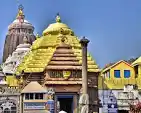
The Jagannath Temple in Puri, Odisha, is a significant 12th-century Hindu temple dedicated to Lord Jagannath (a form of Krishna), his brother Balabhadra, and sister Subhadra, famous for its unique Kalinga architecture, being a major Char Dham pilgrimage site, and its grand annual Ratha Yatra (Chariot Festival). It’s known as the “White Pagoda,” houses wooden idols replaced in a unique ceremony (Nabakalebara), and is a center of the Jagannath cult, attracting devotees worldwide.
Key Aspects:
- Deities: Lord Jagannath, Lord Balabhadra, and Devi Subhadra are carved from neem wood and placed on the Ratnabedi.
- Architecture: A prime example of Kalinga style, featuring curvilinear towers, intricate carvings, and distinct components like the Vimana, Jagmohan, and Nata Mandir.
- Significance: A vital part of the Char Dham pilgrimage circuit for Hindus and a major spiritual center.
- Festivals: The annual Ratha Yatra, where the deities are paraded on massive chariots, is its most famous event.
- Traditions: Unique rituals include the Nabakalebara, where the wooden idols are ceremonially renewed every 12-19 years.
- History: Construction began in the 10th century, with significant additions by King Anantavarman and Anang Bhim Deo.